INTRODUCTORY ARTICLE SEVEN OF THE SEVEN PART SERIES: THE STORIES BEHIND MEMORIES ARE MADE OF THIS
Writing a book had been an idea for some time before I actually did anything about it. I had accumulated a lifetime of experiences across Australia, South Africa and Britain, and many of them had become stories that I enjoyed sharing with family and friends.
Eventually, I began to wonder whether some of these experiences might be worth collecting into a book.
That was how Memories Are Made of This came about. It wasn't the result of a carefully planned writing career or a long-held ambition to become a published author. It was more a case of looking back at the experiences I had collected over the years and deciding that perhaps it was time to put some of them down on paper.
What I discovered was that writing the stories was only one part of the process. Turning them into a published book was another matter altogether.
Finding the stories
The first challenge was deciding what to include.
I had lived in Australia until the age of eight, spent 28 years in South Africa and then moved to Britain in January 2001. Over that time, I had experienced quite a variety of things. There were stories involving travel, wildlife, family, friends, work, music, sport and the occasional situation that had not gone quite according to plan.
I didn't want to write an autobiography, nor did I particularly want to produce a chronological account of my life. Instead, I wanted to select individual experiences that I thought would make interesting stories in their own right.
Some memories were easy to recall. Others needed a little more thought. I found myself revisiting old photographs, trying to remember where something had happened, who had been involved and what had led up to it.
The important thing was to decide whether an experience had a story worth telling. It didn't have to be particularly dramatic, but there needed to be something about it that made it memorable.
Eventually, I settled on 51 stories.
Turning memories into written stories
Once I had identified the experiences I wanted to include, the next job was to write them.
This was not simply a matter of recording what had happened. I needed to turn each memory into something that another person could follow and enjoy reading.
I generally started by putting down what I could remember about the event. Where had I been? Who was there? What happened? Was there something unexpected, amusing or particularly interesting about the experience?
I then worked on the order in which the events were presented, making sure that the story was understandable to someone who had not been there.
I also had to be careful not to confuse remembering an event with remembering every detail of it. Memories are not perfect recordings, and I didn't want to fill in gaps simply to make a story sound better.
My approach was to write in a straightforward, conversational style. I wanted the stories to sound as though I was telling someone about something that had happened to me, rather than trying to impress them with elaborate descriptions or complicated language.
That became an important part of the book's character.
Each story needed to stand on its own, while still contributing to the collection as a whole.
The work behind the manuscript
Having written the stories, I still had quite a bit of work to do before I could think about publishing.
A manuscript is not automatically a finished book. It needs to be reviewed, edited and checked. There are spelling and grammatical errors to find, sentences that need improving and passages that sometimes need rewriting.
There is also the question of consistency. Names, dates, places and other details need to be checked, particularly when stories cover several decades and different countries.
I had to think about the structure of the book, the order of the stories, the introduction and the way the chapters would appear on the printed page.
Then there was the physical presentation. A book needs a cover, a suitable layout, readable text and a professional appearance. These things might seem secondary to the writing, but they are part of the finished product.
I gradually discovered that becoming an author involves a number of different jobs. Writer, editor, proofreader, designer and publisher are all roles that can become part of the process, particularly when you are producing a book independently.
Getting the book published
The first edition of Memories Are Made of This was published on 1 September 2020.
Seeing the book in print was a satisfying moment. Something that had started as a collection of memories and experiences had become a physical book that other people could read.
There is a difference between writing something for yourself and producing something for publication. Once a book is published, it is no longer simply your collection of memories. It becomes something that readers can interpret in their own way.
I found that an interesting part of the experience.
Publishing also introduced me to the practical considerations that come with making a book available to readers. There are decisions about formats, printing, distribution, book descriptions and online listings. There is also the question of how people will discover that the book exists in the first place.
Writing the book had been a creative exercise. Getting it published required a rather different set of skills.
Returning to the book for a second edition
In 2026, I decided to revisit Memories Are Made of This and produce a second edition.
By then, I had a much clearer idea of what I wanted the book to represent and how I wanted it presented. I was also able to look at the original publication with a little more experience behind me.
The second edition gave me the opportunity to review the book, refine its presentation and publish it under my own imprint, Grenyah Publishers.
One of the additions was a companion resource containing more than 1,600 carefully selected links to maps, photographs and other information relating to the stories.
I liked the idea that readers could explore some of the places and subjects mentioned in the book in greater detail. A story might describe an encounter or a journey, but a map or photograph can provide another dimension to the experience.
It also meant that the book could offer something beyond the printed pages without trying to squeeze everything into the manuscript itself.
Returning to a book several years after its first publication also gives you a different perspective. You can see what you originally set out to achieve and consider whether the finished product still represents what you wanted to say.
Discovering that publication is only the beginning
One thing I hadn't fully appreciated when I first published the book was that getting it into print was not the end of the process.
A published book needs to find its readers.
That means making people aware of it, explaining what it is about and giving them a reason to take an interest. It also means learning about book descriptions, author websites, online promotion, social media and the various ways in which readers discover new authors.
I eventually developed my own author website, where I could share information about the book, publish articles and write about some of the experiences behind the stories.
I also began thinking about other ways of making the book accessible, including producing an audiobook. That has involved learning about recording equipment, microphones, audio editing and the technical requirements of audiobook production.
It is another reminder that publishing a book can lead you into areas you might never have considered when you first sat down to write.
There is always something else to learn.
What I have learned from becoming an author
Looking back, the process of turning a lifetime of experiences into a published book has taught me several things.
Firstly, you don't need to have a complete plan before you start. Sometimes the best way to begin is simply to identify the stories you want to tell and start writing them.
Secondly, writing is only part of the job. Editing, proofreading, formatting, cover design and publication all require attention. None of these should be treated as an afterthought.
Thirdly, you need to be prepared to learn. There are practical aspects of publishing that may be unfamiliar, particularly if you are producing your first book. You don't need to know everything at the beginning, but you do need to be willing to find out.
And finally, publishing a book requires a certain amount of patience. It takes time to turn an idea into a finished manuscript, and even more time to work through the various stages of production and publication.
It started with a collection of memories
When I look back at the journey from the original idea to the second edition of Memories Are Made of This, I am pleased that I decided to put the stories together.
The book contains 51 experiences from three countries and several decades of my life. Some are amusing, some are more serious and others simply describe something that happened along the way.
I didn't set out to become a full-time author or to write a grand account of my life. I wanted to preserve and share experiences that I thought were worth remembering.
Becoming a published author has been an enjoyable learning experience, although I have discovered that there is rather more to it than writing a few stories and finding someone to print them.
The important thing, though, is that the stories are now there for other people to read.
And perhaps that is the most satisfying part of the whole exercise. A lifetime of experiences that might otherwise have remained in my memory has become a book that can be picked up, read and shared.
It all started with a simple decision to write a few stories down. I am rather glad I did.
About the author
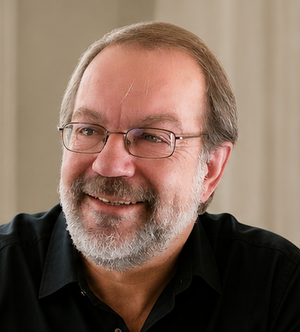
Gregory Mark Haynes
Author | Storyteller | Speaker
Real stories. Real people. Real life.
#GregoryMarkHaynesAuthor
Article themes
#MemoriesAndMoments